Martin Tarr
 “The Angels of Christmas” is a series of Advent Bible Studies on Zoom led by Rev Eddie Sykes on Thursdays in December. Each Zoom meeting starts at 10:00am – note that this is slightly earlier than previous studies – and will finish shortly after 11:00am. If you haven’t received the meeting details direct, please email Eddie at minister@rosythmethodist.org.uk for an access code.
This study is based on the book ‘The Angels of Christmas – Hearing God’s Voice in Advent’ by Susan Robb, published by Abingdon Press only two months ago (ISBN: 978-1791024253). The topics for the sessions are:
1 December – Standing in the Presence of God
Gabriel and Zechariah – Luke 1:5–25
8 December – Let it Be
Gabriel and Mary – Luke 1:26-38
15 December – Acting on the Unbelievable
The Angel of the Lord and Joseph – Matthew 1:18–25
22 December – Hark the Herald Angels Sing
The Angels and the Shepherds – Luke 2:1–14
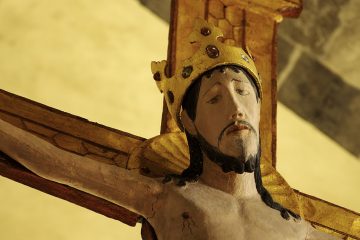
Rev Sheila Cameron’s sermon on 20 November – on the last Sunday after Pentecost, kept as the feast of Christ the King – included this challenge …
Christ the King is the God who lived among us and shared our humanity. If we are to represent his kingdom and make it visible among us, then we must show God’s concern for those who struggle in this world: the poor, the lonely, the rejected, the vulnerable and the suffering. Our reading from Jeremiah 23:1–6 speaks of shepherds who have failed – evidently kings and leaders who let the people down by not protecting or nurturing them, perhaps pursuing personal ambition or the desire for power or wealth. The sheep have been scattered and have become prey to wild animals.
What are the hazards that threaten today’s flocks? Country folk know that shepherds are experts in the ways of sheep, aware of all the dangers they may encounter and the diseases that may afflict them, which suggests to me that Christians should be experts in the ways of the world if they are to reach out to others as Christ did, with courage and empathy, and also taking the same kind of risk that led to his suffering and death on the cross. Are we up to that challenge, prepared to live sacrificially, as we must be if we are to be effective shepherds in today’s world?
Do read the whole of Sheila’s sermon at this link.
Our image was taken in June 2021, and comes from the collection Triumph crucifixes in Gotland by Bene Riobó, CC BY-SA 4.0, via Wikimedia Commons.

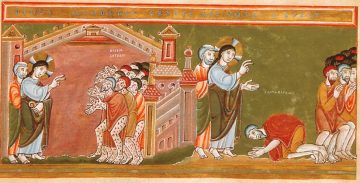
In many ways Rev Sheila Cameron’s sermon on 9 October continued the theme of faith that she had started the week before. Here are some extracts …
Naaman the successful commander thought that something spectacular had to be done to get God’s attention, and especially for him, because he was such an important person: “I thought that for me he would surely come out, and stand and call on the name of the Lord his God, and would wave his hand over the spot, and cure the leprosy!” But the elusive prophet Elisha didn’t even come out of his house or perform any spectacular rituals at all. And Naaman the warrior was offended. But he received the gift of healing as a reward for the grain of faith he carried with him, obeying the instruction to wash seven times in the River Jordan, and his response was to praise God and make thank offerings to Elisha.
All we need is that tiny grain of faith and the willingness to place everything in the hands of God. Don’t we have a tendency to make life more difficult for ourselves than is necessary? Don’t we assume we have to make extraordinary efforts to increase attendance in our churches? But our efforts on behalf of the church would be in vain without the gifts of faith and prayer and in vain without the power of God.
…
Thinking of the plight of many churches in recent years, these efforts didn’t seem to bear much fruit in terms of greatly increased numbers in the pews, and several denominations have had to close down many of their buildings as being no longer affordable, but that doesn’t mean that the Christian faith is moribund. We may have been powerless to recreate Sunday attendance as it was a generation ago, but the life of the church continues to bear witness to the presence and grace of God in its openness to every individual. The recent lockdowns have forced us to explore new ways of doing things, reaching out to house-bound and isolated worshippers, and have revealed people’s hunger for God through the often amazing response to online offerings.
…
We preach the gospel of a Christ alive in the midst of us, calling us to bring the world back to God though nurturing tiny seeds of faith and growing them into a harvest of praise and thanksgiving. And our faith is strengthened daily by awareness of his grace, by the experience of faith rewarded. We who know Christ as our Saviour, who can identify with Christ on the cross, or who have encountered the risen Lord in the course of our life’s journey, have an unshakable confidence that he will always be with us and, as we cherish this certainty and live it day by day, we long to share it with all whom we meet.
Do read the whole of Sheila’s sermon at this link.
The image of the Cleansing of the ten lepers comes from the Codex Aureus Epternacensis (c. 1035–1040). The scribe/artist is unknown, and the image comes via Wikimedia Commons.
